
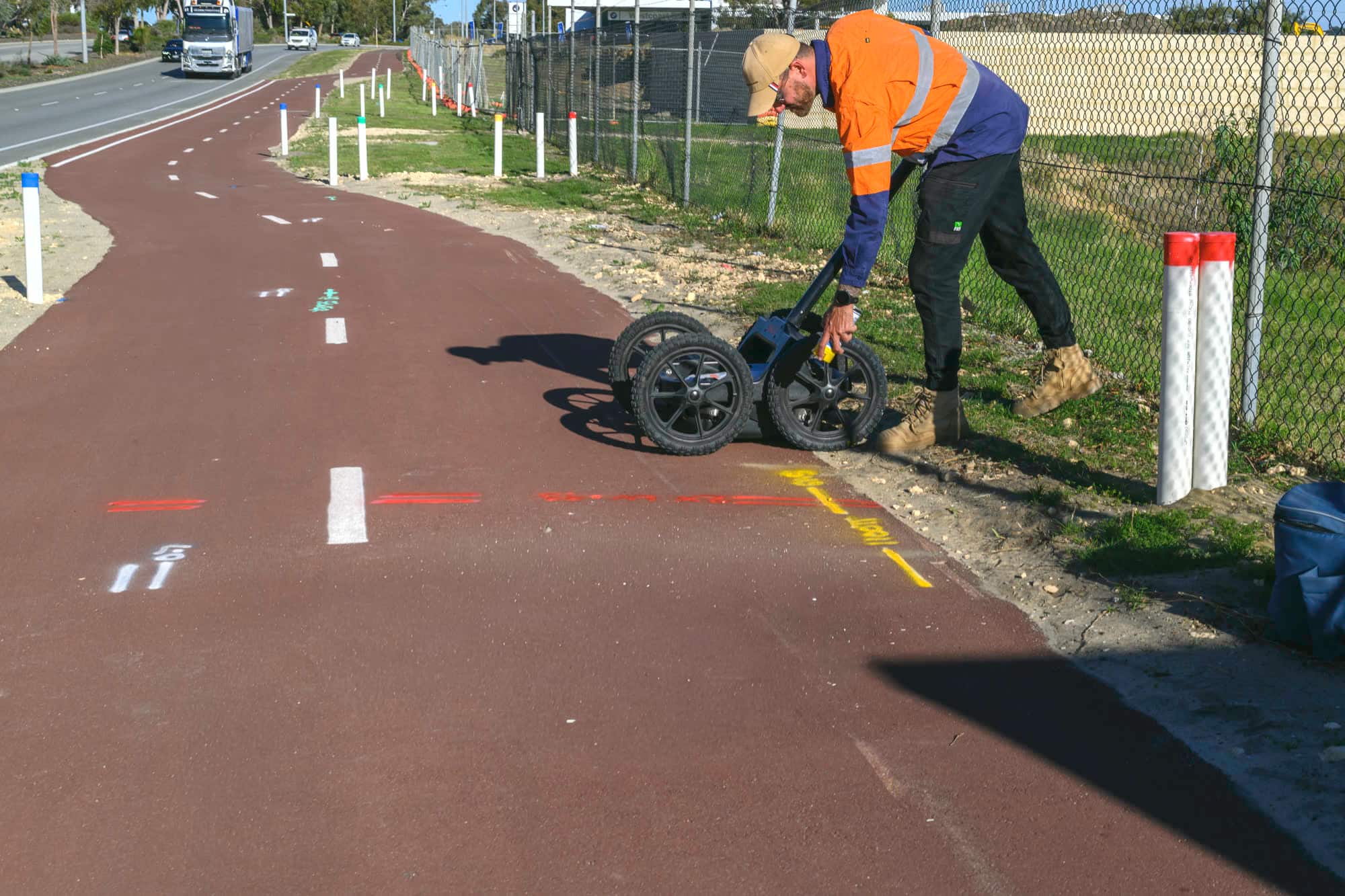
Ground Penetrating Radar
Detect what electromagnetic methods cannot reach.
Many modern networks are plastic water pipe, polyethylene gas main and PVC conduit, none of which respond to standard EM locating. GPR detects non-metallic services, unknown utilities, voids and subsurface anomalies.
What is included
- Non-metallic pipe detection
- Unknown utility identification
- Congested corridor assessments
- Enhanced underground risk detection
Detect what electromagnetic methods cannot reach
Ground penetrating radar is a non-invasive detection technology that uses radar pulses to identify underground features and services without disturbing the ground. We use it alongside electromagnetic locating to give a more complete picture of what lies beneath a project area, particularly for non-metallic services, conduits, voids, buried structures and unknown features that produce no electromagnetic signal.
When GPR is used
- Detecting non-metallic pipes and conduits
- Investigating unknown or abandoned services
- Scanning congested service corridors
- Identifying potential voids and buried structures
- Providing additional information where electromagnetic locating is limited
Combining technology for better results
No single locating method detects every underground asset in every ground condition. Scope Mapping combines GPR, electromagnetic locating, survey and, where required, vacuum excavation to improve confidence in underground service information. GPR performance varies with soil type, moisture, depth and site conditions, so our locators select the combination of technologies that suits the site.
See what is below before you dig
Identifying underground risk before excavation begins reduces the risk of utility strikes, costly damage, project delays and unnecessary excavation.
How it works
- 01Send through the extent of works and the site address.
- 02We order the Dial Before You Dig plans for the area and read them against what you have told us.
- 03On site, services are located, marked and recorded to suit the job.
- 04You get the marks the crew needs, and a record for whoever comes next.