
Utility Locating
Find and mark underground services before excavation begins.
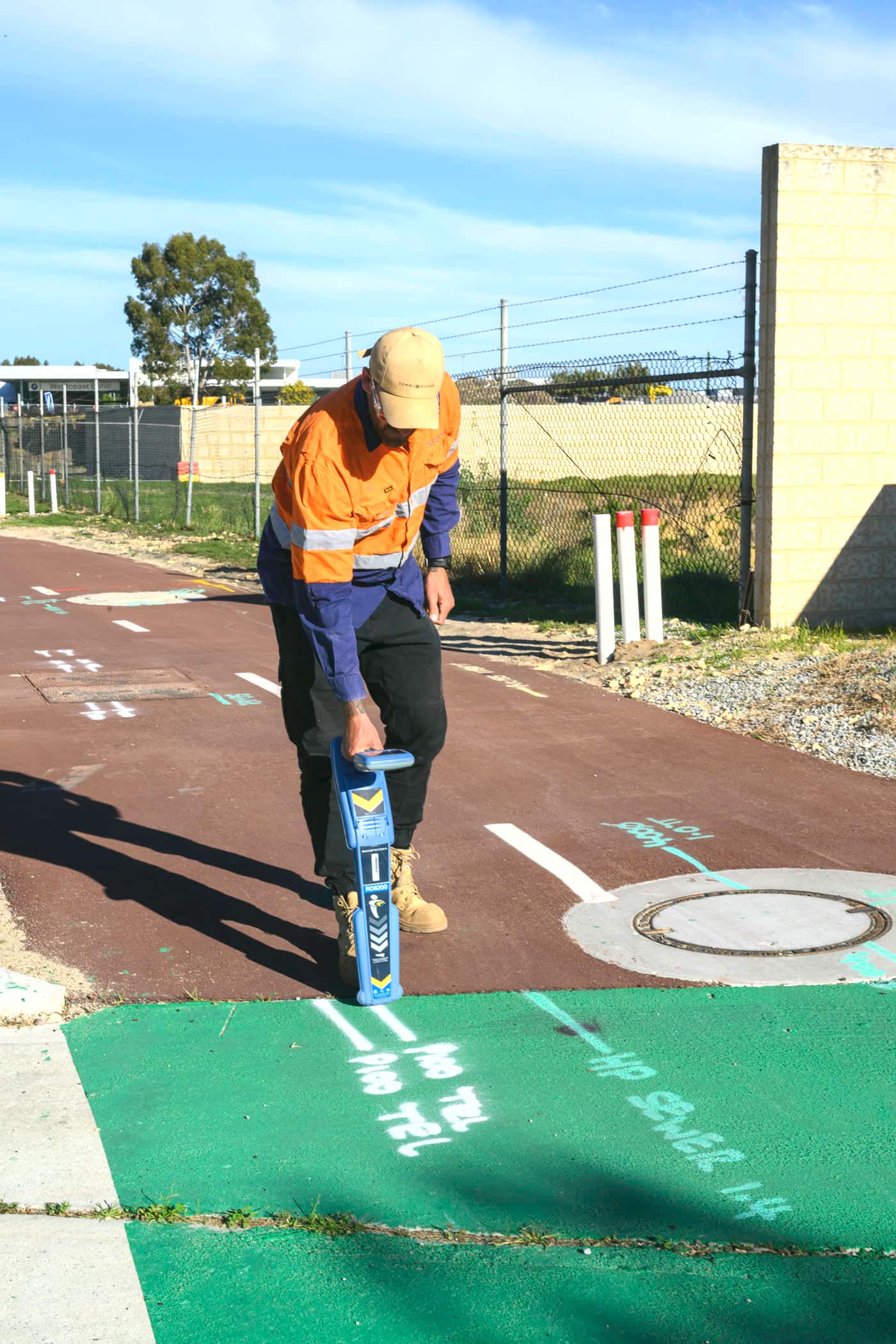
Electromagnetic locating, signal tracing and service identification, with mark-out for excavation and construction. Delivered by Certloc accredited locating personnel to reduce the likelihood of asset strikes, project delays and costly repairs.
What is included
- Electromagnetic cable and pipe locating
- Signal tracing and service identification
- Service mark-out for excavation and construction
- Certloc accredited locating personnel
- Utility strike prevention support
What utility locating actually is
Detecting, identifying and tracing underground services before anyone breaks ground, so that excavation, design and construction decisions are made on real information rather than on an old drawing.
- Electrical power cables
- Street lighting and communications conduits
- Water mains and reticulation
- Sewer and drainage infrastructure
- Gas pipelines
- Fibre optic networks
- Irrigation and private service networks
- Industrial process services
How the locate is done
Most metallic pipes and cables carry a signal. A transmitter applies current to the service, which creates an electromagnetic field around it, and a receiver traces that field to establish alignment and estimate depth. The quality of the locate depends on how well a signal can be introduced onto the target service, which is why the connection method and frequency are chosen for the site rather than by habit.
- Direct connection at valves, meters, terminations and inspection points
- Frequency selected for the service and the ground conditions
- Signal performance judged against pipe material, joints and soil conductivity
- Congested corridors interpreted rather than guessed
Where electromagnetic locating stops
Not every service is conductive. Plastic water pipe, polyethylene gas main and PVC conduit will not respond to standard EM locating at all, which is why ground penetrating radar is run alongside it rather than instead of it. A locate that only uses one method is only as good as that method.
How it works
- 01Send through the extent of works and the site address.
- 02We order the Dial Before You Dig plans for the area and read them against what you have told us.
- 03On site, services are located, marked and recorded to suit the job.
- 04You get the marks the crew needs, and a record for whoever comes next.